20g whey PWO is optimal dosefor young resistance trained men
Posted: Fri Jan 24, 2014 4:28 pm
Myofibrillar muscle protein synthesis rates subsequent to a meal in response to increasing doses of whey protein at rest and after resistance exercise
BACKGROUND:
The intake of whey, compared with casein and soy protein intakes, stimulates a greater acute response of muscle protein synthesis (MPS) to protein ingestion in rested and exercised muscle.
OBJECTIVE:
We characterized the dose-response relation of postabsorptive rates of myofibrillar MPS to increasing amounts of whey protein at rest and after exercise in resistance-trained, young men.
DESIGN:
Volunteers (n = 48) consumed a standardized, high-protein (0.54 g/kg body mass) breakfast. Three hours later, a bout of unilateral exercise (8 × 10 leg presses and leg extensions; 80% one-repetition maximum) was performed. Volunteers ingested 0, 10, 20, or 40 g whey protein isolate immediately (∼10 min) after exercise. Postabsorptive rates of myofibrillar MPS and whole-body rates of phenylalanine oxidation and urea production were measured over a 4-h postdrink period by continuous tracer infusion of labeled [(13)C6] phenylalanine and [(15)N2] urea.
RESULTS:
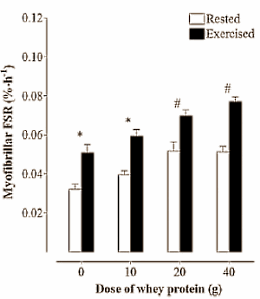
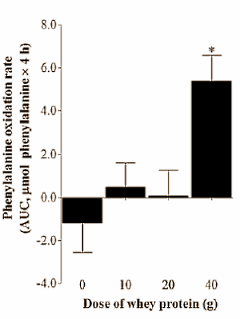
Myofibrillar MPS (mean ± SD) increased (P < 0.05) above 0 g whey protein (0.041 ± 0.015%/h) by 49% and 56% with the ingestion of 20 and 40 g whey protein, respectively, whereas no additional stimulation was observed with 10 g whey protein (P > 0.05). Rates of phenylalanine oxidation and urea production increased with the ingestion of 40 g whey protein.
CONCLUSIONS:
A 20-g dose of whey protein is sufficient for the maximal stimulation of postabsorptive rates of myofibrillar MPS in rested and exercised muscle of ∼80-kg resistance-trained, young men. A dose of whey protein >20 g stimulates amino acid oxidation and ureagenesis.
BACKGROUND:
The intake of whey, compared with casein and soy protein intakes, stimulates a greater acute response of muscle protein synthesis (MPS) to protein ingestion in rested and exercised muscle.
OBJECTIVE:
We characterized the dose-response relation of postabsorptive rates of myofibrillar MPS to increasing amounts of whey protein at rest and after exercise in resistance-trained, young men.
DESIGN:
Volunteers (n = 48) consumed a standardized, high-protein (0.54 g/kg body mass) breakfast. Three hours later, a bout of unilateral exercise (8 × 10 leg presses and leg extensions; 80% one-repetition maximum) was performed. Volunteers ingested 0, 10, 20, or 40 g whey protein isolate immediately (∼10 min) after exercise. Postabsorptive rates of myofibrillar MPS and whole-body rates of phenylalanine oxidation and urea production were measured over a 4-h postdrink period by continuous tracer infusion of labeled [(13)C6] phenylalanine and [(15)N2] urea.
RESULTS:
Myofibrillar MPS (mean ± SD) increased (P < 0.05) above 0 g whey protein (0.041 ± 0.015%/h) by 49% and 56% with the ingestion of 20 and 40 g whey protein, respectively, whereas no additional stimulation was observed with 10 g whey protein (P > 0.05). Rates of phenylalanine oxidation and urea production increased with the ingestion of 40 g whey protein.
CONCLUSIONS:
A 20-g dose of whey protein is sufficient for the maximal stimulation of postabsorptive rates of myofibrillar MPS in rested and exercised muscle of ∼80-kg resistance-trained, young men. A dose of whey protein >20 g stimulates amino acid oxidation and ureagenesis.